The Ultimate Expression of Control Might Actually Be Freedom

Why building a stronger body isn't really JUST about exercise.
It's about building a life you don't have to hold yourself back from.

Okay, this is a great sentement (i think)...but what does it really mean?!
What if I told you that the ultimate expression of control might actually be freedom?
I want you to really think about that. Because so much of what we're taught about our bodies revolves around control.
Control your weight. Control your posture. Control your movements.
Control your symptoms. Control your calories. Control your pain.
Don't lift like that. Don't let your knees go past your toes.
Don't run if your knees hurt. Don't jump after having babies.
Don't do anything that might make your back worse.
Why did we start believing that the more we can control our bodies, the safer we'll be.....but what if our constant need to control our bodies is actually preventing us from experiencing freedom within them? Mindblowing, right? We think control will gives us freedom...yikes.
What if the goal was never to spend the rest of our lives thinking about how we move? What if the goal was to develop enough strength, capacity, and trust that we could stop thinking about our bodies so much and start experiencing our lives?
That's the conversation I want to have. Because it's the foundation of everything I believe about movement, and it's why I created Built Through Movement.

When Control Becomes a Form of Restriction
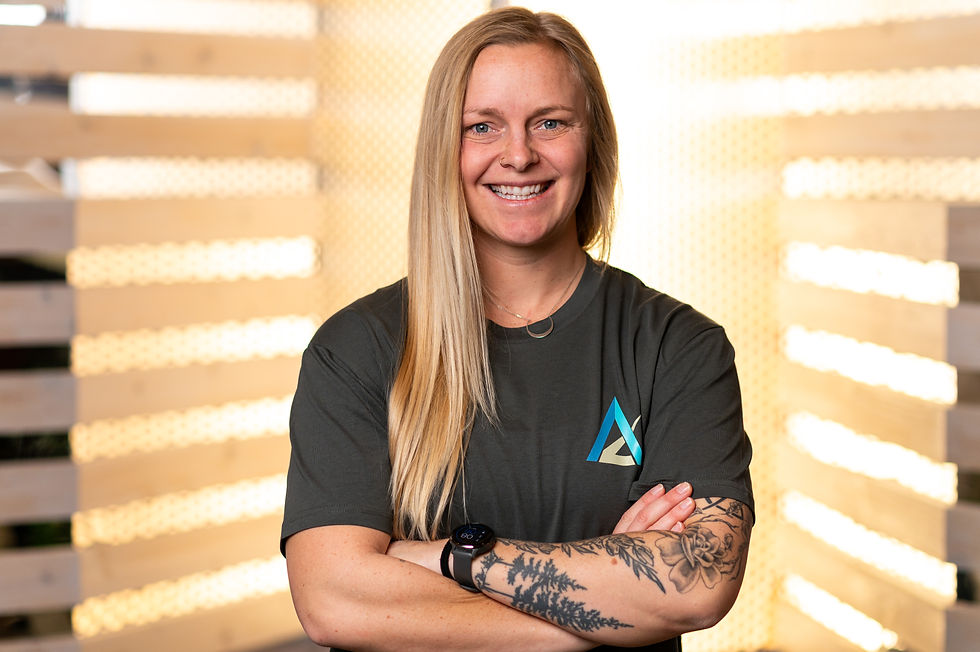
I've had three knee surgeries. I've fractured bones, experienced injuries, carried and delivered two babies, and navigated plenty of seasons when my body didn't feel or function the way I wanted it to. I know what it's like to start questioning your body.
After an injury, pregnancy, or prolonged experience with pain, it's common to become more aware of how you're moving. You start monitoring things that used to happen automatically. You might brace before picking something up, hesitate before jumping, avoid certain exercises, or question every uncomfortable sensation.
And to be clear, sometimes those protective strategies are necessary. Pain is information. Injuries require appropriate management. Healing tissues have real biological constraints, and certain conditions require specific precautions.
But there's a difference between temporarily modifying movement to support recovery and allowing those modifications to define what you're capable of for the rest of your life....
There's a difference between feeling safe because you've eliminated every challenge and feeling confident because you've developed the capacity to navigate challenges. One depends heavily on controlling your circumstances. The other comes from developing your ability to respond to them.
And that distinction changes everything.
This is why CONTROL RUNS DEEP.
Your Body Was Never Designed to Move Perfectly
My favorite saying "everything in the gym is made up."
One of the most fascinating things about the human body is its ability to adapt. Your nervous system is constantly processing information and coordinating movement based on what's happening around you. The surface you're standing on, the weight you're carrying, your level of fatigue, your previous experiences, your strength, your balance, and the demands of the task all influence how your body moves. Your body is continuously making adjustments.
Movement variability isn't inherently a problem to fix. When you run, you don't land exactly the same way with every step. When you squat, your body doesn't reproduce an identical movement pattern every single repetition. When you hike over unpredictable terrain, your body is constantly responding to changes beneath your feet. That variability can be part of how we adapt.
Of course, not all movement strategies are equally appropriate for every person or task. Technique, tissue tolerance, and individual anatomy matter. But the idea that there is one universally perfect way to move, and that anything outside of it is dangerous, doesn't reflect the complexity of human movement.
Think about skiing down a mountain. You cannot consciously control every bump, turn, landing, or change in terrain. You need strength, coordination, balance, the ability to produce and absorb force, and a nervous system capable of responding to an environment that is constantly changing. Unpredictability is PART OF MOVEMENT.
The goal is to build a body capable of responding to it. That's adaptability, and adaptability creates opportunities for freedom.

The Goal Isn't to Avoid Every Challenge. It's to Build the Capacity to Meet Them.
This is one of the biggest distinctions I make when working with clients. We can spend our lives trying to avoid physical demands, or we can work toward developing the capacity to meet them.
Let's use knee pain as an example. Imagine someone who has experienced multiple knee injuries. They've been told to avoid running, jumping, deep squatting, or lifting heavy. Maybe some of those recommendations were appropriate at a particular point in their recovery. But years later, they're still avoiding those movements. Not necessarily because they've established that their body cannot tolerate them today, but because they haven't had the opportunity to explore what they're currently capable of.
Over time, their world gets smaller. They stop participating in activities they love. They start identifying as someone with bad knees, and eventually, they may stop questioning whether things could be different.
Now imagine taking another approach. Instead of immediately asking what they should avoid, we start asking better questions. What can their knees currently tolerate? What strength do they have? What happens when we introduce different ranges of motion? How do they respond to loading? What happens during activity, afterward, and the following day? What specific demands does their desired activity require?
Now we have information, and information gives us a starting point. We can begin developing strength, coordination, and tolerance through appropriate progressions. That doesn't guarantee they'll never experience pain or another injury, but it gives them an opportunity to build capabilities rather than organizing their entire life around avoidance.
Capacity creates options. And options create freedom.
Your Diagnosis Is Information. It Is Not Your Entire Identity.
Something I notice during movement assessments is how often people introduce themselves through everything that's wrong with their bodies. They tell me about their diagnoses, their imaging results, their surgeries, the things they've been told not to do, the movements that hurt, and the limitations they've learned to accept.
And I understand why. When you've spent years searching for answers, those explanations become an important part of how you understand your body. But I want to challenge something.
What if we spent as much time exploring what's possible as we do identifying what's wrong?
A diagnosis matters. Medical history matters. Structural differences matter. I'm not interested in dismissing any of those things. But your diagnosis doesn't necessarily tell me how strong you are today. It doesn't tell me everything about your movement capacity. It doesn't tell me what loads you can tolerate, and it doesn't automatically tell me what you'll be capable of six months or five years from now.
That's why I assess rather than guess. A movement assessment isn't about finding a perfect body or identifying every movement that looks different from a textbook. It's about understanding the person in front of me. Their anatomy, their history, their current capabilities, their symptoms, their goals, and the gap between where they are and where they want to be.
Sometimes that means building strength. Sometimes it means improving tolerance to certain positions or loads. Sometimes it means developing coordination, balance, or confidence. And sometimes it means recognizing that someone needs additional medical evaluation before progressing. But the goal is always to make informed decisions based on the individual, rather than assuming their future is predetermined by their past.
Strength Is Not the Destination
I think this is where the fitness industry often loses sight of what actually matters. We become so focused on the metrics. How much can you squat? How much do you weigh? How many calories did you burn? How fast can you run? What does your body look like?
Those measurements may serve a purpose, but they're not the reason someone started moving in the first place.
A mom might want to get stronger because she wants to carry her children without constantly worrying about her back. A runner might want to build lower-body strength because she wants to return to the trails after a knee injury. A postpartum athlete might want to rebuild her capacity for impact because she misses jumping, sprinting, and playing sports. A 78-year-old woman might want to develop the strength, balance, and confidence to mount her horse from the ground.
Those are the goals that matter. The exercises are simply tools. The sets and reps are tools. The strength assessments are tools. The progressive overload is a tool.
Movement is a means to an end.
When we lose sight of that end, it's easy to turn exercise into another thing we feel obligated to control. Instead of asking whether our training is helping us live the lives we want, we start measuring success solely by what happens inside the gym.
But what if the most meaningful progress happens outside of it? What if it's the first time you jump without hesitating? The first hike you finish feeling confident in your knees? The first time you pick up your child without anticipating pain? The first time you realize you haven't spent the entire day thinking about your body?
That's my favorite kind of progress...

Body Trust Isn't Something You Can Just Think Your Way Into
I talk a lot about helping women build bodies they trust. But I want to be clear about something. Trust isn't simply telling yourself that you're strong. It's not ignoring symptoms. It's not repeating positive affirmations until you're no longer afraid, and it's certainly not pushing through every warning sign because you believe you should be capable of more.
Trust is developed through experience.
When you progressively expose your body to appropriate challenges, you create opportunities to learn. You discover what you can tolerate, identify where your current limitations are, develop new physical capabilities, and learn how to respond when something doesn't feel right. You begin collecting evidence that your body can adapt, and over time, those experiences can change the way you approach movement.
Think about learning to ride a bike. In the beginning, everything requires conscious attention. Your balance, your hands, your feet, your speed, and your surroundings. You're trying to control every variable. But with practice, your nervous system becomes more skilled at coordinating the task. Eventually, you stop thinking about every individual movement. You simply ride.
The control hasn't disappeared. It's become integrated. And now you have the freedom to enjoy the experience.
That's what I want women to understand about rebuilding physical capacity. The goal isn't to spend the rest of your life consciously controlling every movement. It's to develop the skills and capacities that allow movement to become something you experience rather than something you constantly monitor.
What If We Stopped Treating Our Bodies Like Problems to Solve?
There's a psychological component to all of this that I think deserves more attention. When you've experienced injury, persistent pain, or significant physical changes, your body can begin to feel like something you need to fix.
You start looking for everything that's wrong. Every imbalance, every weakness, every asymmetry, every sensation that might indicate a problem. Suddenly, movement becomes another source of anxiety. Instead of experiencing the joy of what your body can do, you're constantly evaluating what it might not be doing correctly.
I don't believe that's what movement should become.
Your body is not a project that must reach perfection before you're allowed to enjoy your life. It's a living, adapting system. One that will change through different seasons of pregnancy, postpartum, injury, aging, stress, and recovery. Those changes don't automatically mean your best days are behind you. They mean your current circumstances deserve to be understood.
You may need a different strategy. You may need more time. You may need additional support. You may need to adjust your expectations while building toward something meaningful.
But you do not need a perfect body to pursue a meaningful life. And you don't need to eliminate every physical limitation before you can begin building confidence in what your body can do.
Control Is the Means. Freedom Is the End.
When I think about the Built Through Movement philosophy, I think about five interconnected concepts: awareness, control, capacity, trust, and freedom.
Awareness is understanding your body, your symptoms, your capabilities, and the demands of your goals. Control is developing the coordination and movement strategies necessary to navigate different tasks. Capacity is building strength, tolerance, and adaptability through appropriately progressed physical challenges.
Trust is developing confidence through experience, education, and evidence of what you're capable of. And freedom is having more choices about how you participate in your life.
These aren't rigid stages or a universal formula. They influence one another, and they develop differently for every person. But they help explain why I believe movement is about so much more than exercise.
We don't build strength just to become stronger. We build strength so we can do more. We don't develop coordination so we can consciously control every movement forever. We develop coordination so we can navigate movement with greater confidence and efficiency.
We don't progressively load our bodies simply to increase numbers on a spreadsheet. We do it because the activities we love place demands on us, and we want to be prepared to meet them.
We build capacity so we have options. And we build trust so we can make decisions from a place of understanding rather than being governed entirely by fear.
The Ultimate Expression of Control Might Actually Be Freedom
Imagine what your life could look like if you spent less time thinking about everything that might go wrong with your body. If you didn't automatically question your knees every time someone invited you on a hike. If you didn't assume that having babies meant certain activities were permanently behind you. If you didn't view every uncomfortable sensation as evidence that your body was failing. If you could recognize a limitation without allowing it to define your identity. If you could approach movement with curiosity instead of constant apprehension.
Not because your body was invincible. Not because pain or injury would never happen again. But because you had developed the knowledge, strength, adaptability, and confidence to navigate physical challenges.
It's why I believe the ultimate expression of control might be the point where you no longer feel the need to consciously control everything. Where the strength you've built becomes part of how you live. Where movement becomes less about managing your body and more about experiencing what it allows you to do. Where exercise stops being the destination and becomes the vehicle.
You don't build control so you can spend your life controlling your body. You build control so you can spend more of your life living in it.
And that is the foundation of Built Through Movement. Helping women build bodies they trust for life. Not because nothing will ever go wrong, but because they deserve the opportunity to discover what's possible.
Control is the means. Freedom is the end. And movement is how we begin to close the gap.
Ready to Discover What's Possible for Your Body?
You don't need another list of things you shouldn't do. You need to understand what your body is capable of today and what it will take to get where you want to go.
A Built Through Movement™ Movement Assessment is a 90-minute, individualized session where we look at your movement, strength, mobility, injury history, and personal goals to establish your starting point. Rather than guessing or relying solely on a diagnosis, we identify your current capabilities, explore potential limitations, and determine what needs to be developed to help you move toward the life you want to live.
Whether you're returning to movement after an injury, navigating postpartum changes, or simply wanting to feel stronger and more confident in your body, this is where we begin.
Because you can't build toward what's possible until you understand where you're starting.
Built Through Movement™ | Durango, Colorado
Assess, don't guess. Build a body you trust for life.

Comments